
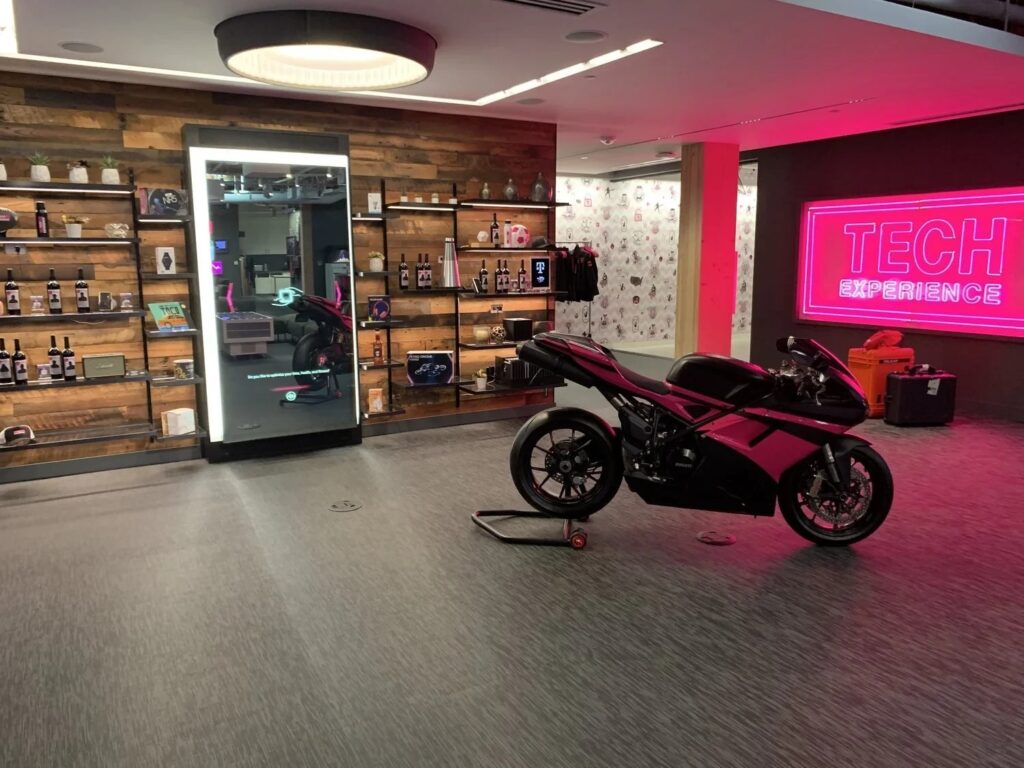
T-Mobile wanted visitors to see what retail could feel like once 5G is everywhere, with nothing to learn first. The answer was a full-length augmented reality mirror where picking up a product box starts its story. Built three times.
Six-page PDF case study.
T-Mobile’s Tech Experience team wanted visitors to see what retail could feel like as 5G reshapes the consumer goods industry. It had to be something a visitor could walk up to and try in seconds.
Show near-future retail as 5G reshapes the consumer goods industry, in a way a visitor can walk up to and try in seconds.
Make the product the interface. No menu to learn and no screen to tap. Pick up a box, show it to the mirror, and watch it come alive.
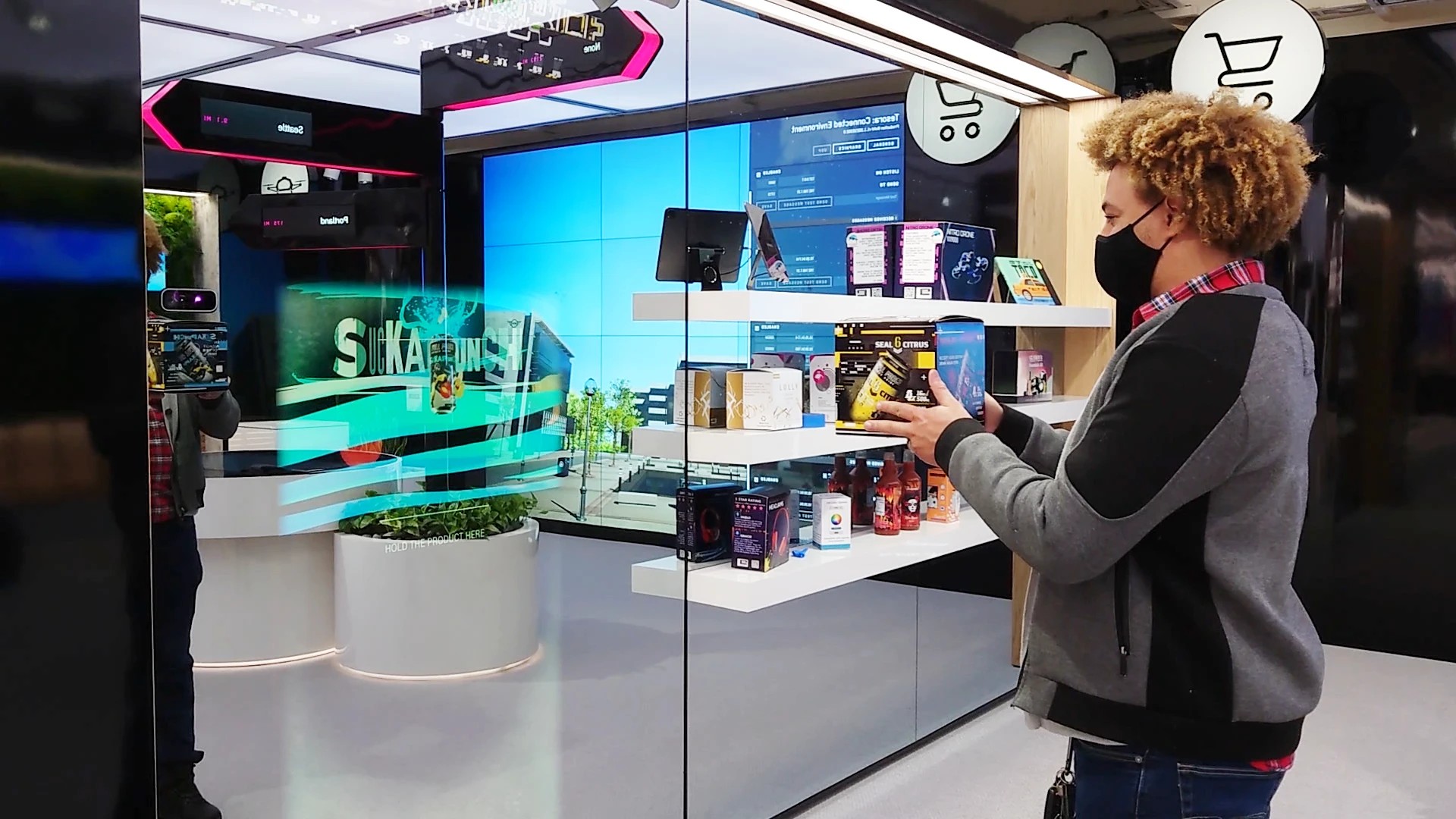
A mirror needs one line of instruction: hold the product here. Everyone in the room can see what the person at the glass is doing, so each use works as a demonstration for the people watching.
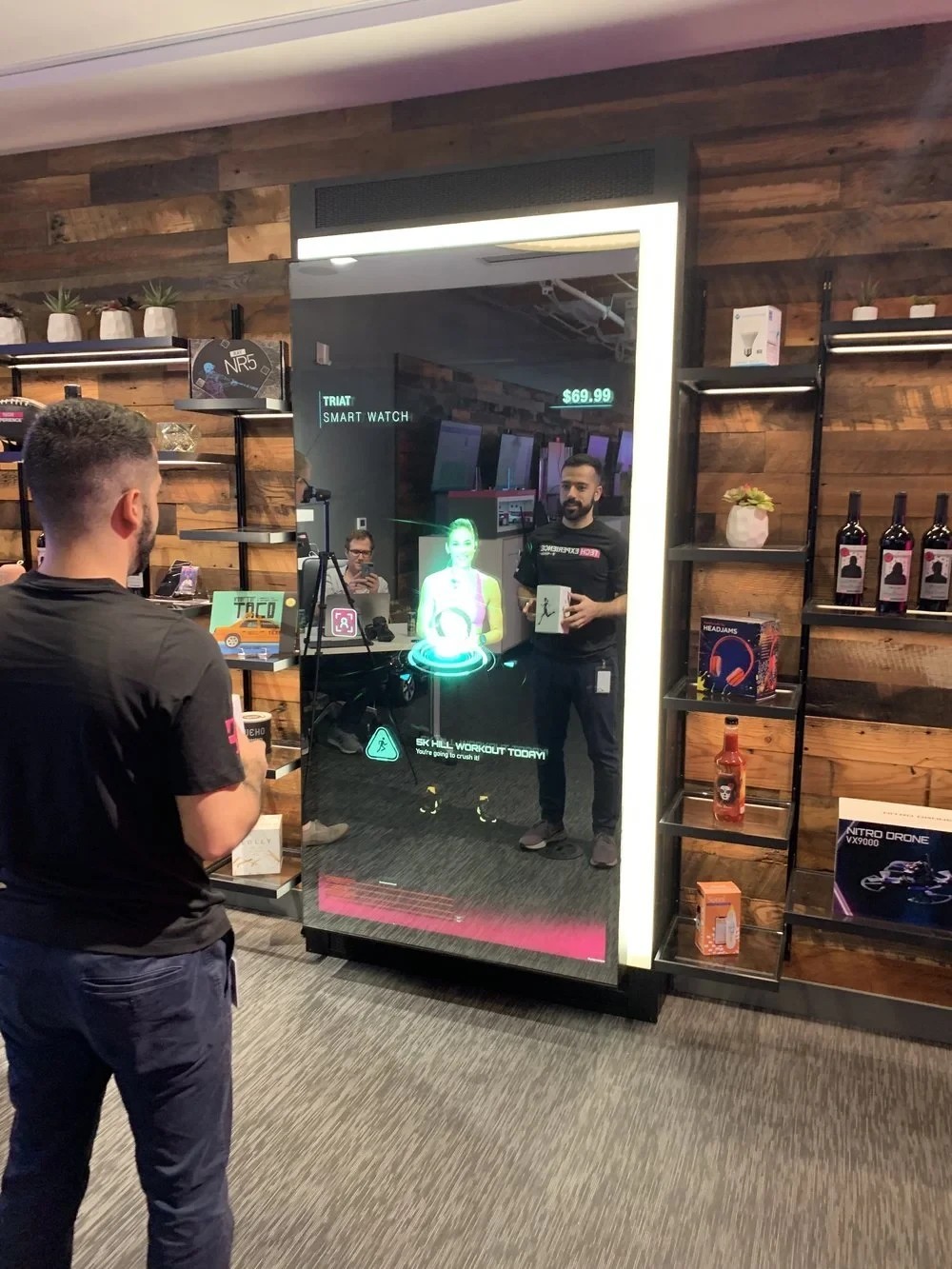
A visitor takes a package from the shelf and holds it up to the glass. From there the mirror does the work.
A visitor takes a package from the shelf and holds it up to the mirror.
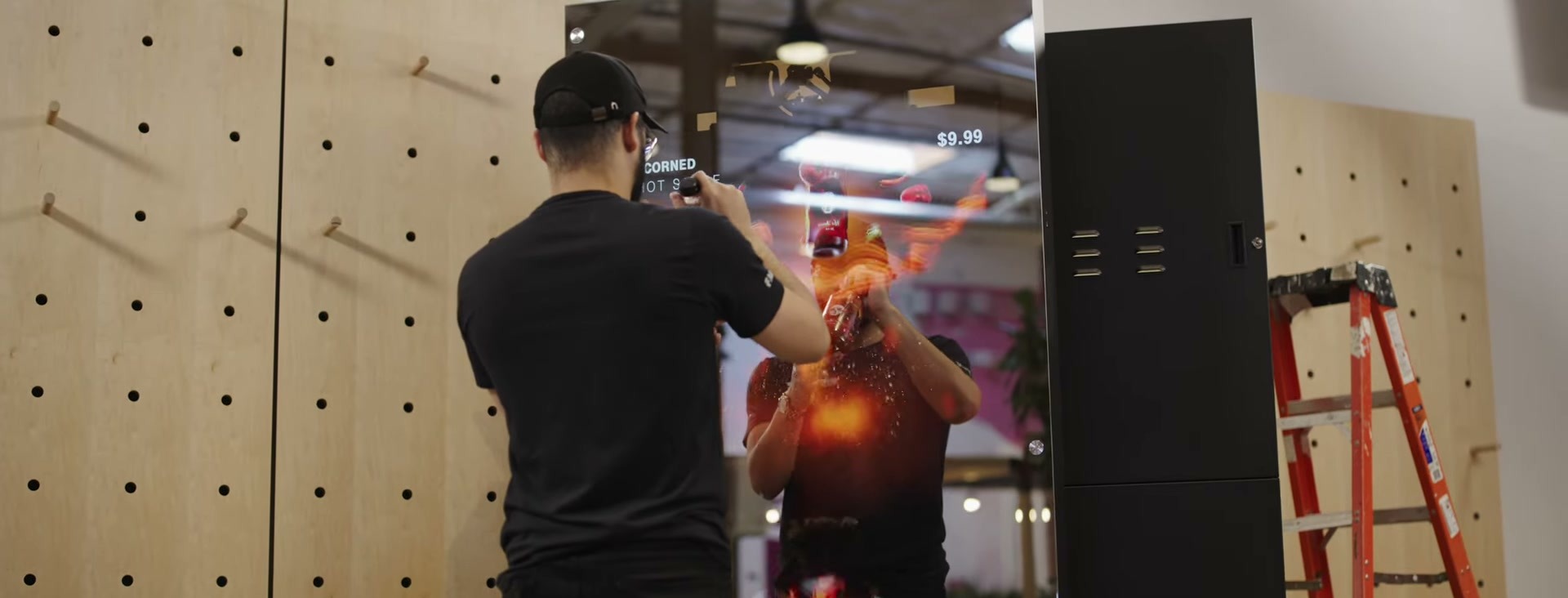
Computer vision tells which product it is, and which side of the box is facing the glass.
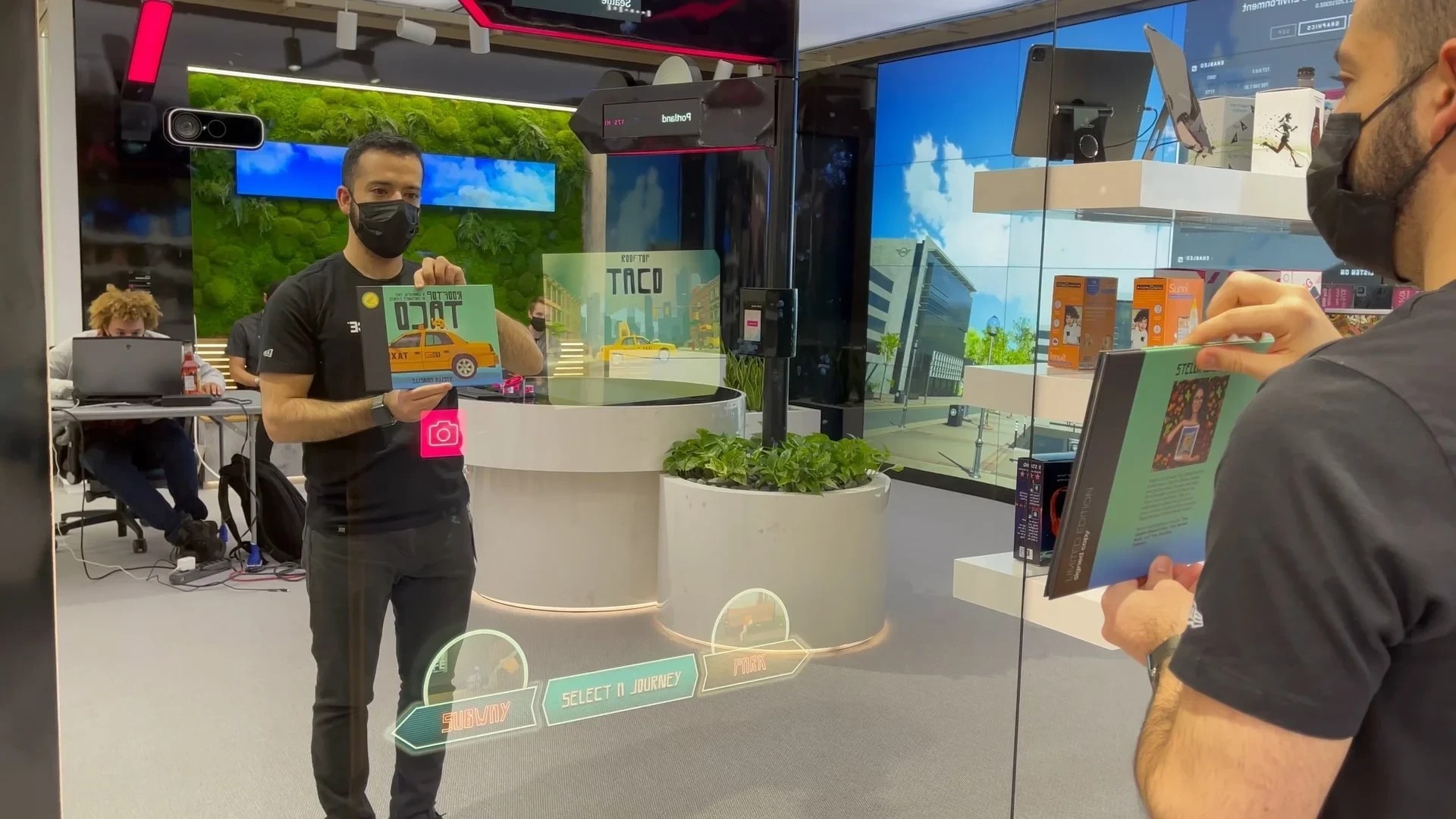
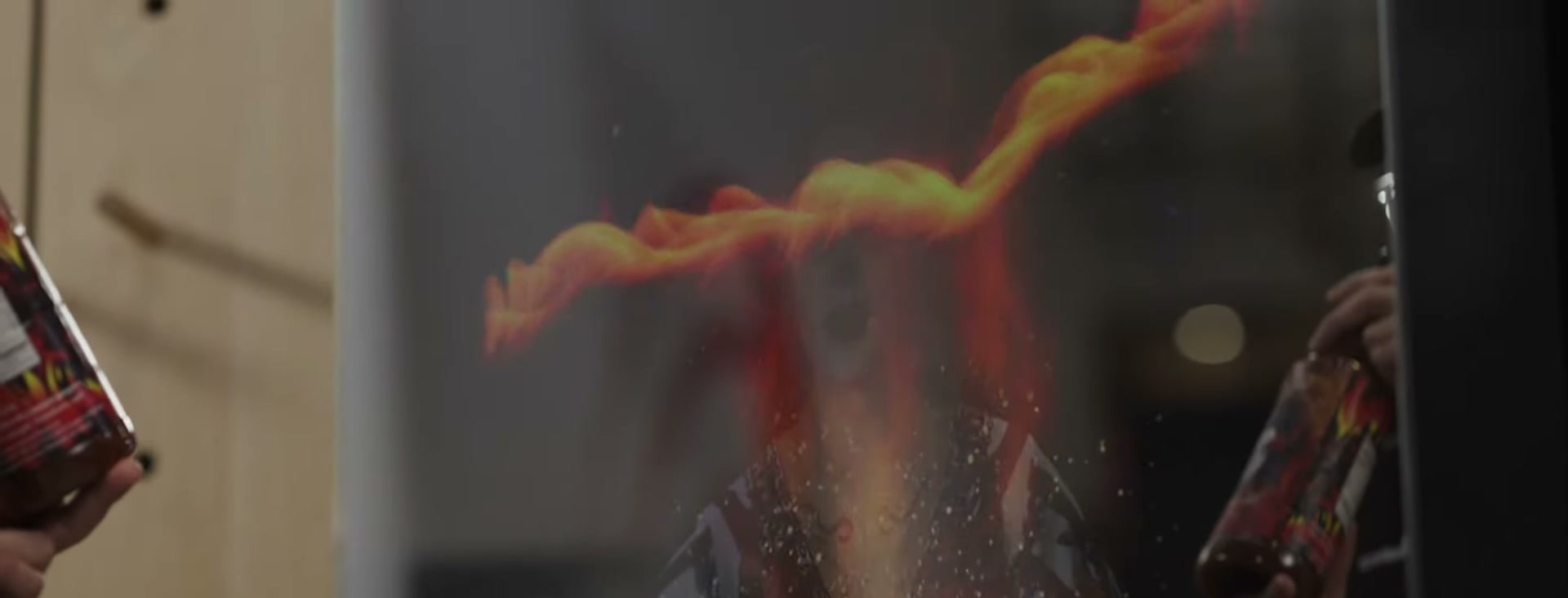
Graphics, video, and games appear on the mirror and follow the object as it moves.
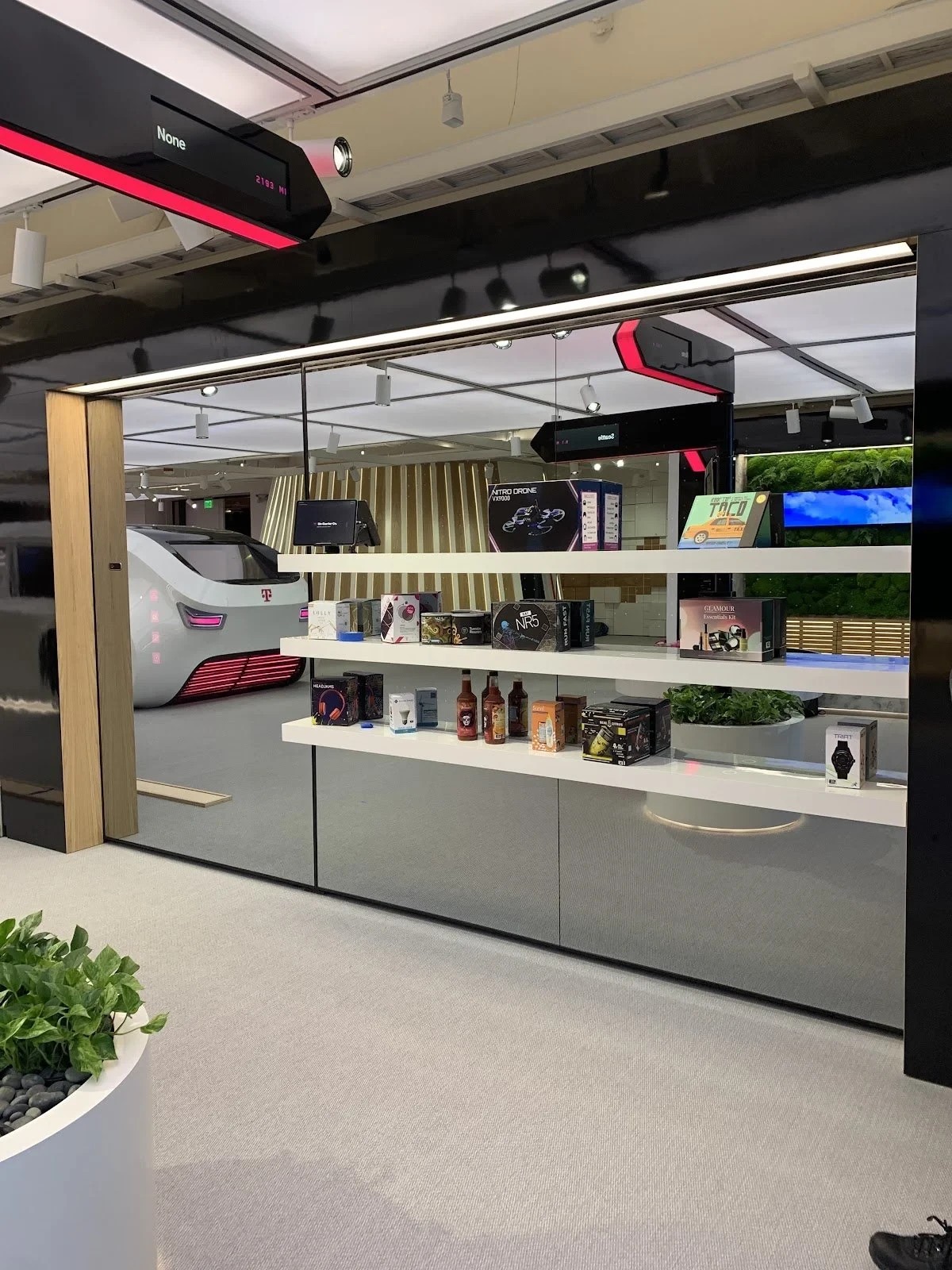
The shelf holds ten fictional products, among them a smartwatch, a drone, headphones, coffee, and a children’s book. Each package was designed so the mirror can recognize it, and each side of a box opens a different chapter of that product’s story: a music video, a promo, an interactive 3D game, a branded moment.
A variety pack of energy drinks has a scene for each of its four flavors. The drone box starts a real-time flying game. The children’s book opens a choose-your-journey story.
The first mirror was well received, and T-Mobile came back for more. Each build kept the core idea and changed what the hardware had to do.
One full-length mirrored screen built into the center, made to stay and run all day.
The same experience made portable, so the mirror can be shown somewhere other than its home.
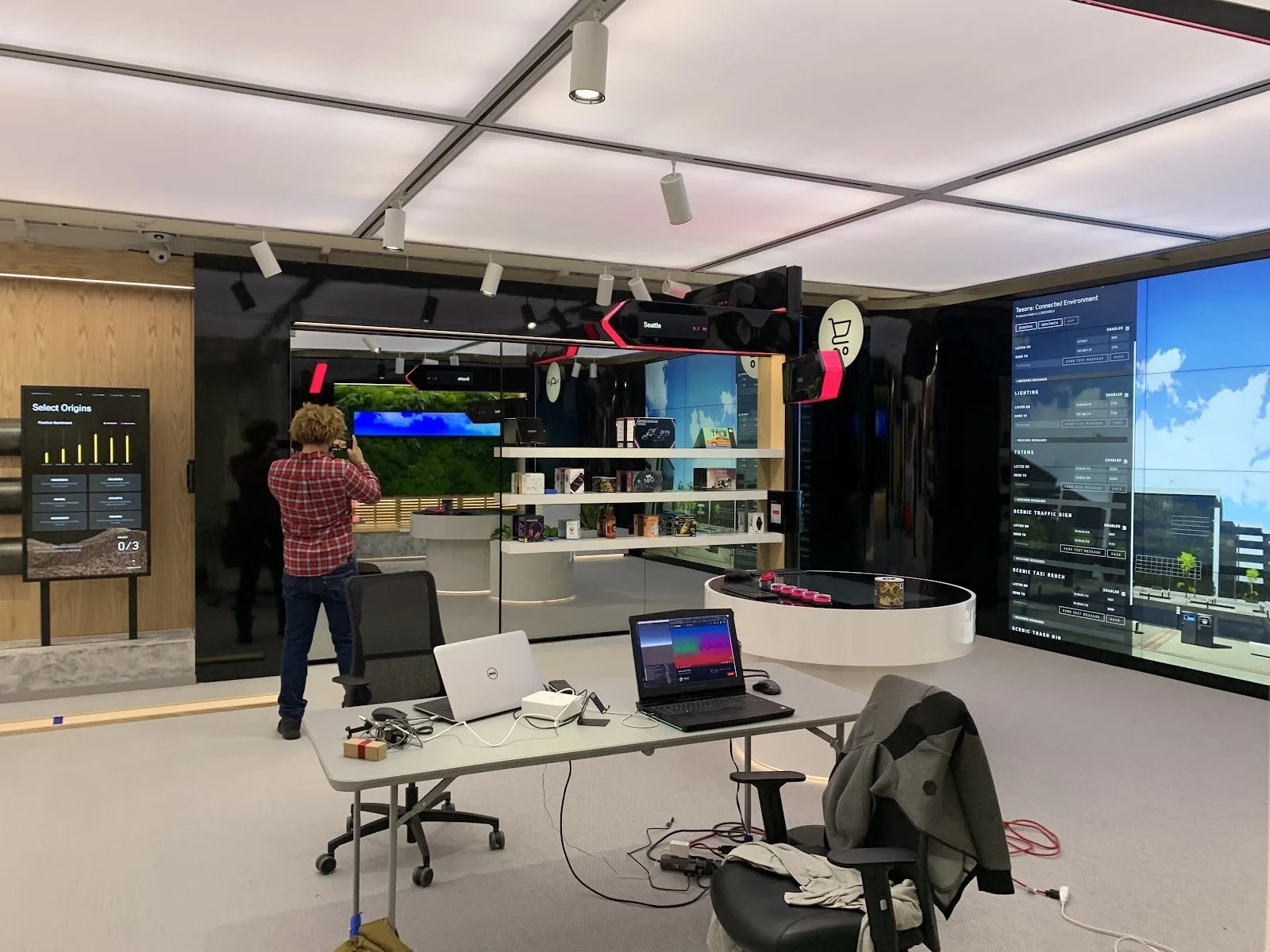
Two screens working together with a Kinect depth sensor, so the system sees the person as well as the product.
The Magic Mirror was built for one setting, but the approach carries to any room where you need strangers to understand something fast.
A physical object removes the learning curve. People already know how to pick something up.
The screen follows what the visitor does. It feels like their action, not a playback.
One idea became three builds. Design the core so it can move, stretch to two screens, and add sensors.
T-Mobile commissioned a second mirror after the first was well received. In 2023 T-Mobile and Google Cloud used the Magic Mirror as the demo in a 5G edge computing proof of concept.
No visitor counts or sales figures have been published for this project, so none are quoted here.
The six-page PDF covers the project, how the mirror works, the three builds, and what it shows about interactive retail. Pass it to the person who needs to see it.
Book a 30-minute project call. Bring the product, the room it will live in, and the person you most want to win over.